If you're getting a new website, one of the first decisions is whether to start from a template or have one designed from scratch. Both can work. They just suit different situations.
Here's an honest comparison, including when a template really is the better choice.
What's the difference?
A template (or theme) is a pre-made design. You, or whoever builds your site, swap in your logo, colours, text and photos. The layout, structure and interactions were designed for thousands of other businesses before you.
A custom website starts from a blank canvas. The layout, page structure, content hierarchy and interactions are designed around your business: who your customers are, what they need to know, and what you want them to do next.
Side by side
| Template | Traditional custom build | Coco Creatives | |
|---|---|---|---|
| Upfront cost | Lowest | Highest, often agency pricing | From $1,500, quoted up front |
| Time to launch | Fast | Slow, with long design and build stages | Close to template speed |
| Looks unique | Rarely. Others use the same theme | Yes | Yes, designed from a blank canvas |
| Fits your content | You fit your content to the layout | The layout fits your content | The layout fits your content |
| Design choices | Pick from what the theme offers | Usually one or two concepts | Three clickable homepage directions |
| Performance | Themes often load features you don't use | Only what you need | Only what you need, so it's usually faster |
| SEO structure | Generic | Built around what your customers search for | Built around what your customers search for |
| Room to grow | Can hit the theme's limits | Built with your future pages in mind | Built with your future pages in mind |
Custom, at close to template speed
A custom website used to mean a long, expensive process. That's why so many small businesses settle for a template.
I use AI to speed up the slow, repetitive parts of the job: drafting page copy for you to review, building out layouts and prototypes quickly, and writing and checking code. That time saved goes into the parts that matter: understanding your business, designing around your customers and refining the details.
Every design decision is still made by me, for your business. You get a custom website that's genuinely yours, without the wait or the agency price tag.
When a template makes sense
I'll be honest: sometimes a template is the right call.
- You're testing an idea and need something online this week.
- Your budget is very tight, and you have the time to set it up yourself.
- You need a simple one-page site, like a landing page or an event.
If that's you, a good template on a reputable platform is a perfectly sensible start.
When custom is worth it
- You're competing on trust. Service businesses, professionals, health, trades and hospitality all win or lose on first impressions. Looking like everyone else works against you.
- You have a lot of services to explain. A template's layout rarely matches how your offer is structured.
- You want to be found on Google. A custom build lets the page structure follow keyword research, rather than a theme's defaults.
- You're planning to grow. A site built from consistent, reusable components makes it easy to add pages later without a redesign.
A real example: Calltime
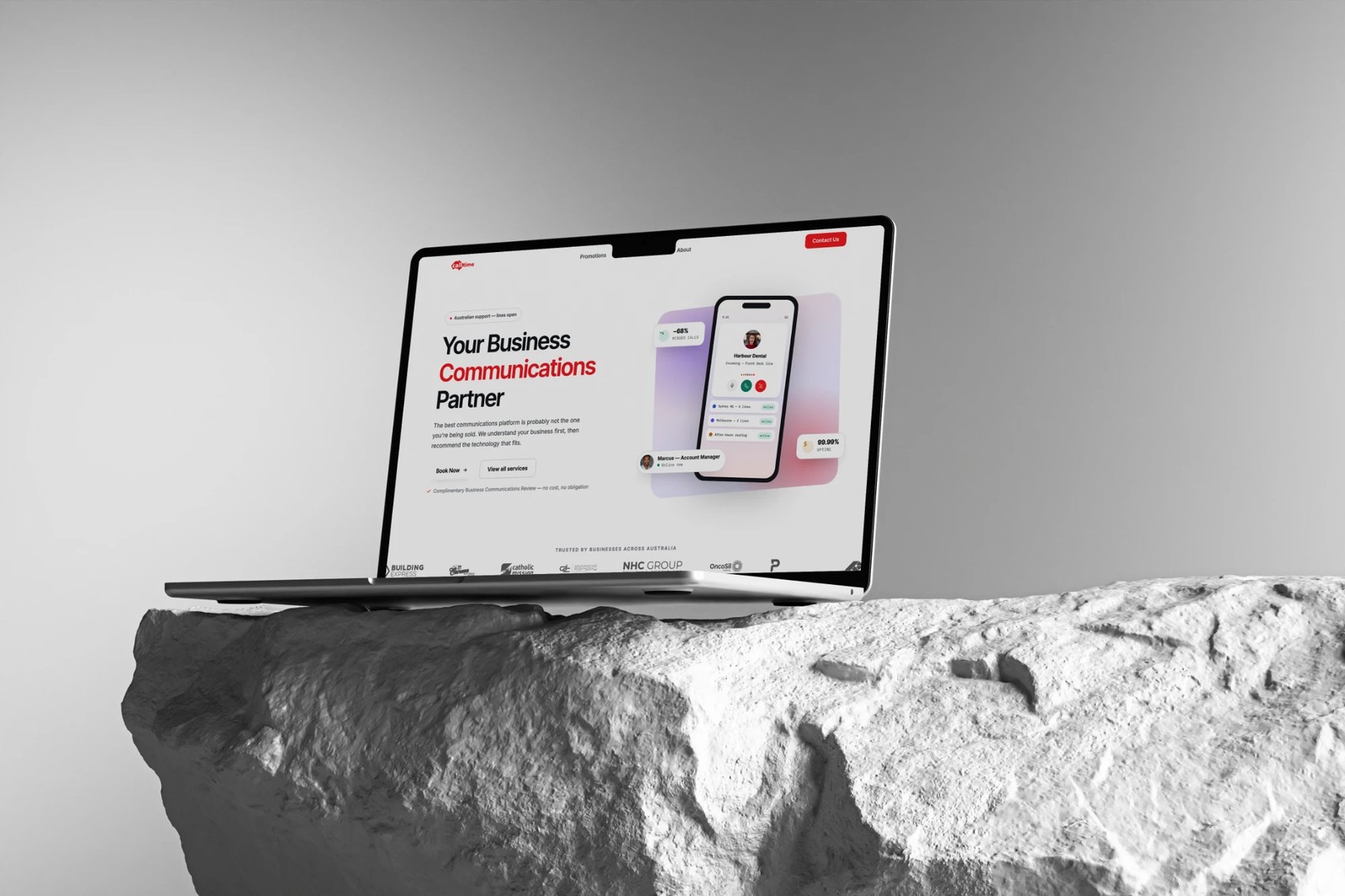
When I designed the website for Calltime, an independent business communications provider, they had eleven services to explain, each of which needed to be findable, understandable and easy to enquire about.
A template would have forced all eleven into the same generic card grid. Instead, the site was designed around them:
- Each service family got its own accent colour, so services can be told apart at a glance.
- Every page's structure was shaped by keyword research into what people actually search for.
- The build uses shared components, so new services can be added without redesigning anything.
"Isn't custom much more expensive?"
It doesn't have to be. Custom used to mean big agency budgets, but working directly with an independent designer removes a lot of that overhead. My custom websites start from $1,500, and that's still designed from a blank canvas, not a re-skinned theme. You can read more in How much does a website cost?
It's also worth comparing total cost over time. A cheaper template site that needs replacing in two years can end up costing more than doing it properly once.
What about page builders?
Drag-and-drop page builders sit somewhere in between. They're flexible, but they often add a lot of extra code, which can slow your site down. They also make it easy for layouts to drift as different people edit different pages.
My approach is to design and build the site properly, then hand it over as a fully editable WordPress site. You can change text, images and pages yourself, without being able to accidentally break the design.
The bottom line
- Choose a template if speed and the lowest upfront cost matter most right now.
- Choose custom if your website needs to build trust, explain what you do clearly, get found on Google and grow with your business.
Not sure which fits? Tell me about your business and I'll point you the right way, even if that's a template.
Chloe, Coco Creatives. Sydney web designer with 8 years in web design and branding. I design and build every site myself, from our first chat through to handover.